I led the product and the team that shipped Sabu
Savicore, Sabu
20K
users in the first 22 days of Early Access, with $0 on ads.
As Co-founder and CPO of Savicore, I set the vision and the roadmap, ran research and led a 15+ person team. We shipped Sabu, a Mac and Windows club for League of Legends players, and grew it through partners, coaches and streamers instead of ads.
- My role
- Co-founder and CPO
- What I owned
- Vision, roadmap and priorities, research, product design, the team
- Team
- 15+ coaches, developers, designers and a PM
- Company
- Savicore raised $1.4M2
20K users and 1.3K daily actives by day 22 of Early Access, as Savicore’s CEO reported publicly.1
Players want one place, not another tool
Discovery1 of 7
Savicore began as a subscription coaching platform for League of Legends. I ran research with our players and coaches to learn how they spend an evening around the game. They chat in one app, look up matches in another, find coaching somewhere else, and their friends who do not play League have no reason to join.
The insightPlayers do not want another tool. They want one place to hang out, learn and plan with friends, including the friends who do not play.
I set the vision: a club first, games as packs
Vision and plan2 of 7
I set the vision and a two-year MVP roadmap inside a five-year plan. Sabu would be a club first. Community, Messages, voice and classes for everyone, and League tools as a pack you add when you want them.
To ship it, I restructured the company around scrum and lean planning, and tied design, technology and operations to the business goals.
Revenue up 48% in two months on the coaching platform
Proof first3 of 7
Before Sabu, I aligned our design system, technology and operations on the coaching platform. In two months, revenue rose 48%, click-through 15% and unique visitors 120%. That gave the team the confidence and the base to build Sabu.
We cut the gate on voice rooms
Exploration in Figma4 of 7
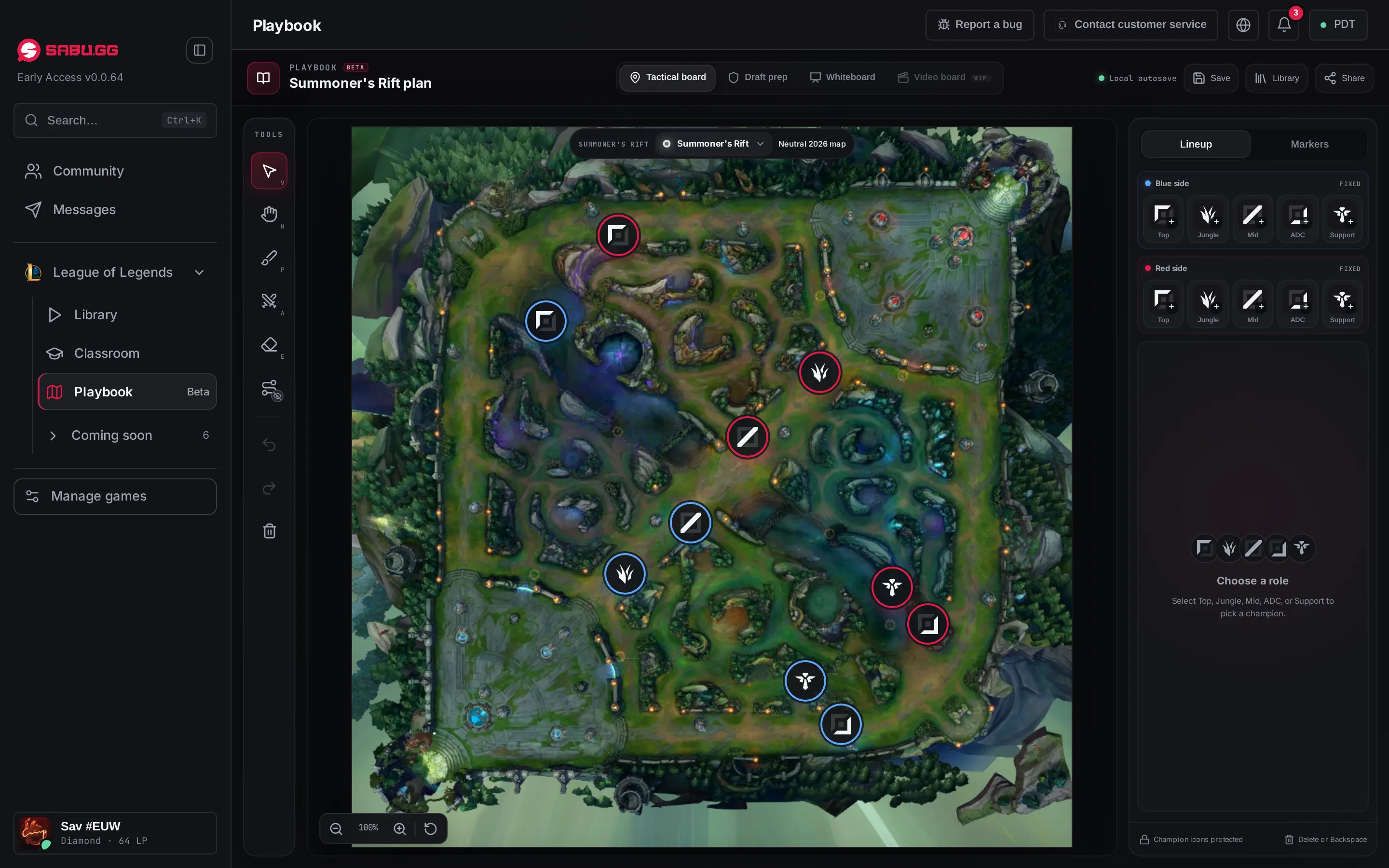
I designed the product in Figma with our designers, from the club shell to every League tool, on one glass design system shared by the app and the website.
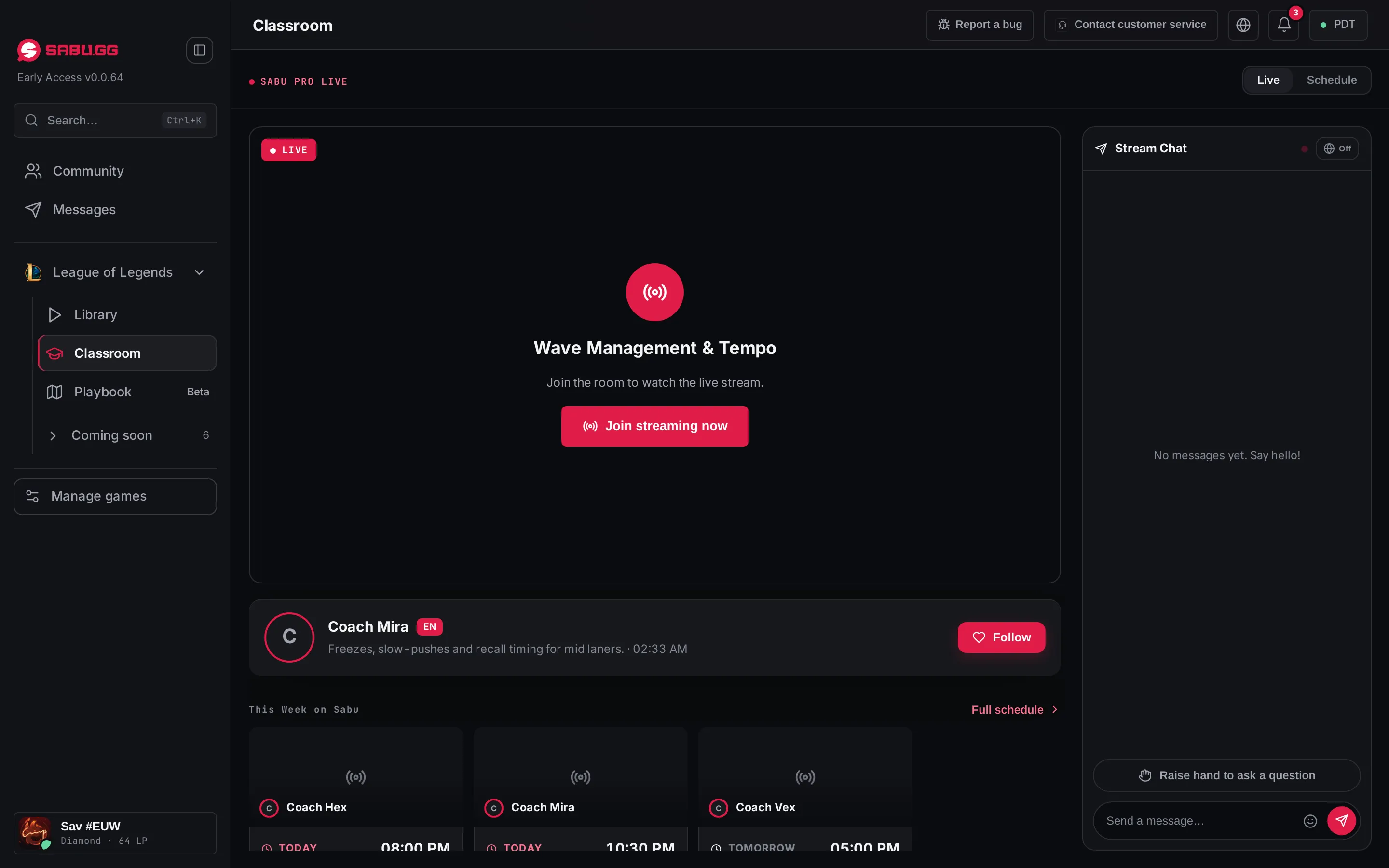
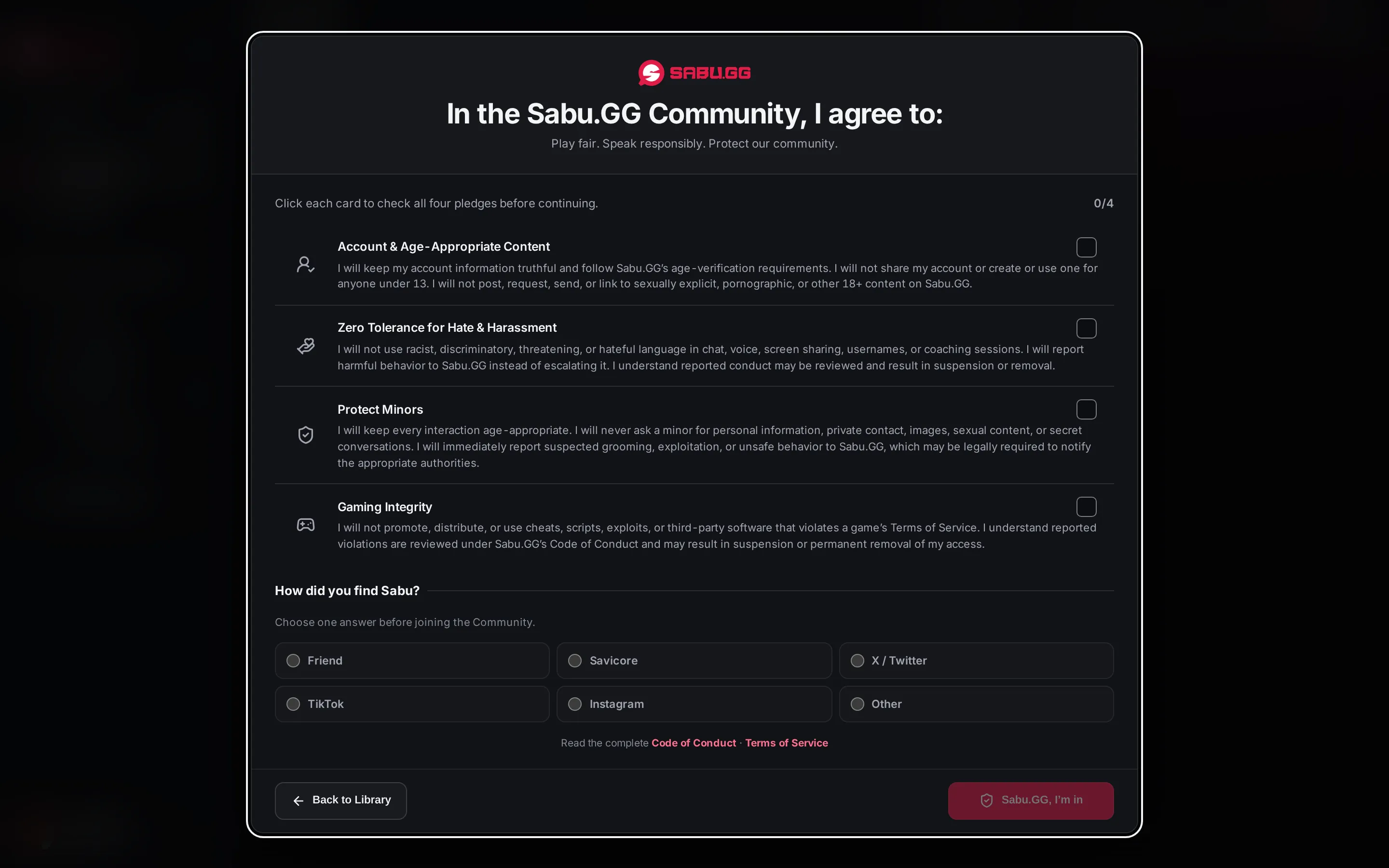
Voice rooms first waited until you added a game. We cut that gate and opened voice to every member, because hanging out includes talking. To keep the room safe as it grew, joining Community starts with a short code of conduct pledge.
Decisions I made
-
Club first, games are packs
A visitor who does not play League sees Community and Messages only. League tools appear when they add the game.
Why. Friends who do not play are part of the evening. The club had to welcome them first.
Trade-off. New League players are one step from the tools. Accounts already linked to Riot keep their full menu.
-
Voice is open to everyone
Every member can join voice rooms, with or without a game.
Why. Talking is how people hang out. A gate there would have emptied the rooms.
Trade-off. More people in voice means more to moderate, so we added the Community pledge.
-
Glass on the frame, never on the content
Navigation and panels use glass. Messages, tables, maps and video stay on solid surfaces.
Why. Players read fast in the busiest screens. Text and shared screens must stay sharp.
Trade-off. Less of the glass look where the content is densest.
Early Access on Mac and Windows, in two languages
Leading the team to ship5 of 7
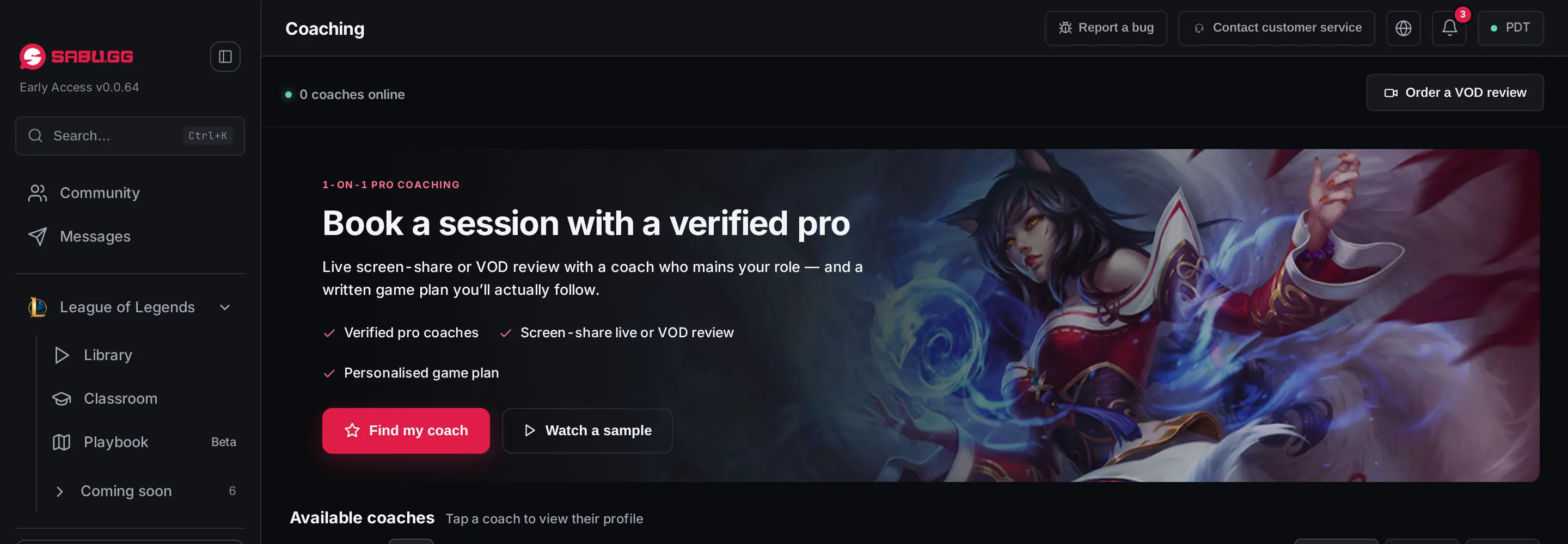
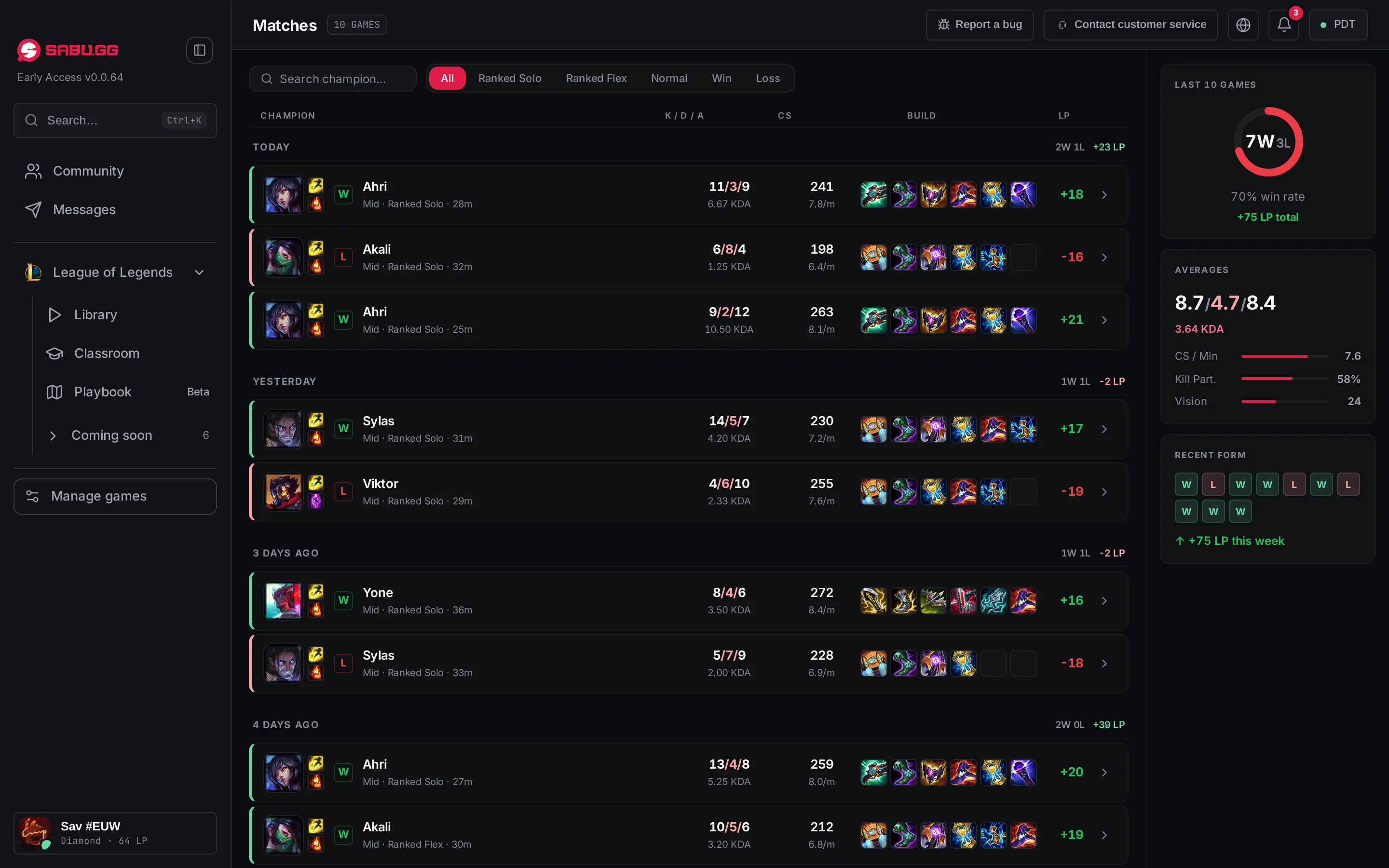
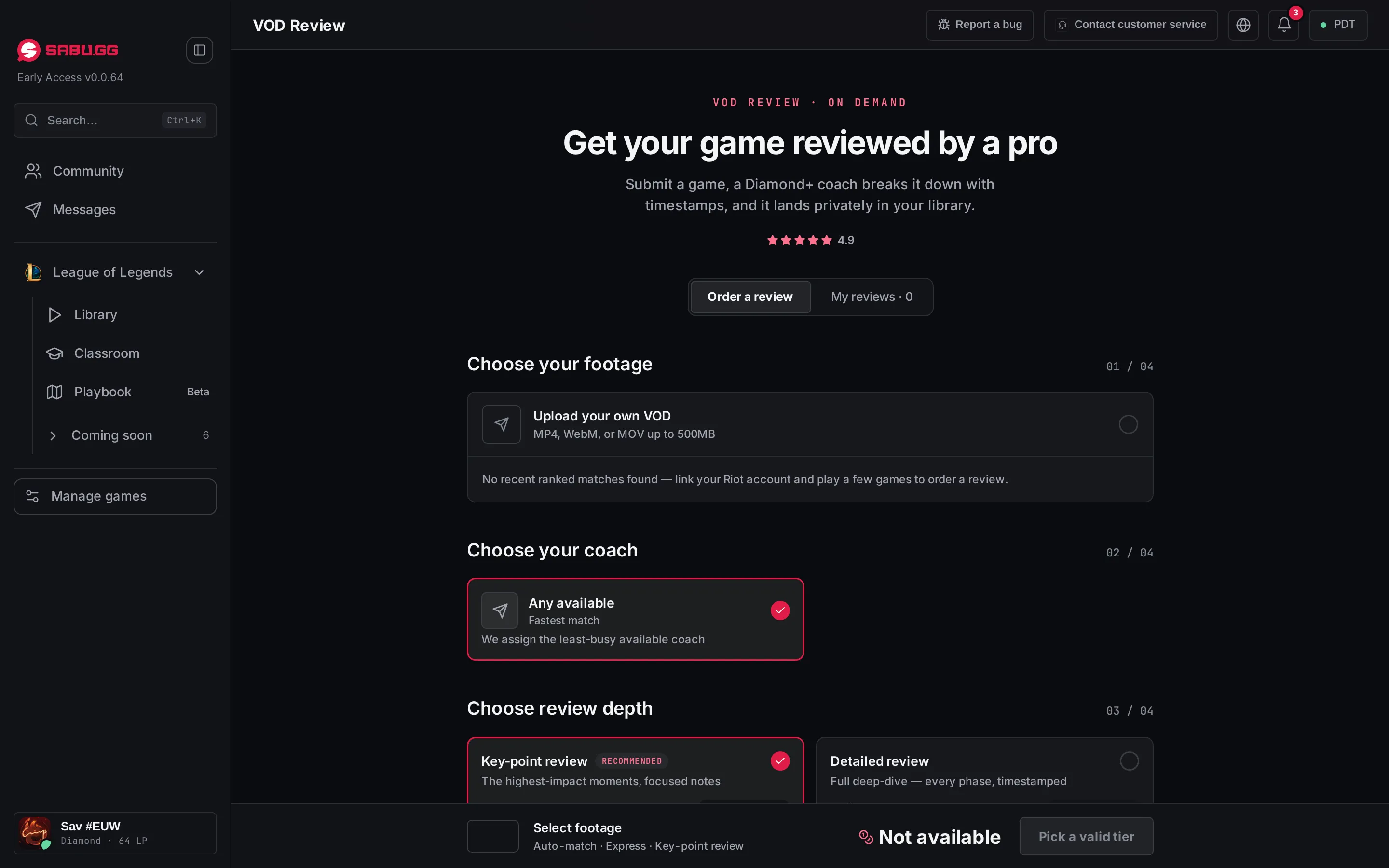
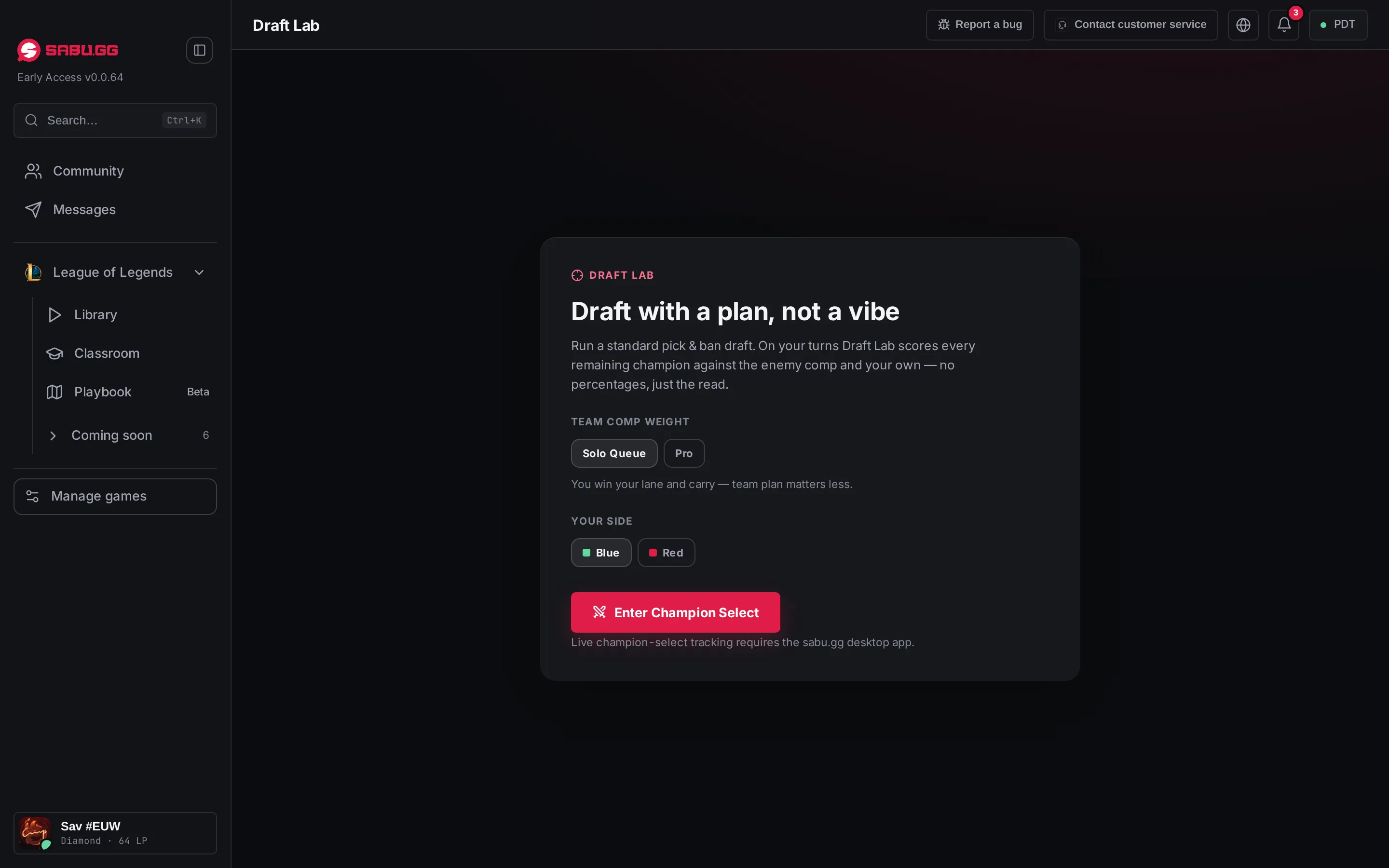
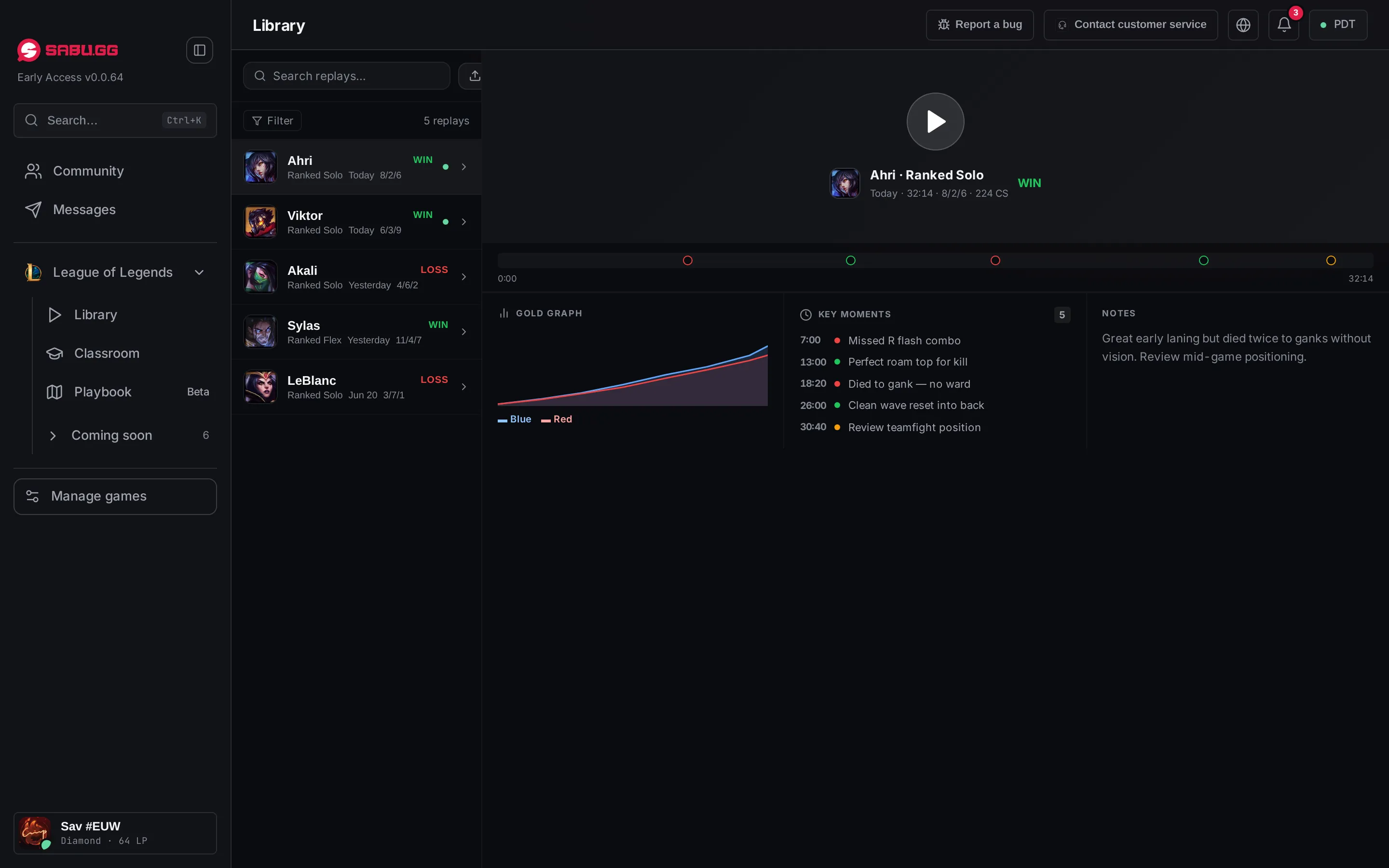
I led coaches, developers, designers and a PM from roadmap to Early Access, in English and Brazilian Portuguese. We built Community, voice rooms and live classes as the core of the club. Then we shipped the League pack: Library, Playbook, VOD review, coaching sessions, Matches, Replays and Draft Lab.
20K users in 22 days, with $0 on ads
Outcome6 of 7
More games and more coaching, on the same shell
What’s next7 of 7
More game packs. The club shell is built so new games plug in as packs, next to League, without changing how members hang out.
Coaching inside the club. Bringing classes, reviews and sessions closer to where friends already talk, so learning and hanging out happen in one place.
What I learned. Our growth came from people players already trust: partners, coaches and streamers. Next time I would bring them into planning, not only into launch.
Sources
Screens are rendered from the Sabu desktop app source in web mode, using its built-in demo accounts and demo data. No real user data. Champion artwork belongs to Riot Games.